
Love a hearty bowl of bolognese with pasta? There’s a lot to love about Italy, and food is definitely at the top of my list!
One of my favorite meals to make (and eat!) is bolognese. It’s warm, hearty, delicious, and simple—perfect! I like to prepare extra servings ahead of time to keep in the fridge or freezer for an easy mid-week meal. But be warned: this sauce needs one thing above all—time! If you work during the week, this may be a weekend activity.
First things first, I will seriously offend some people for calling this “bolognese,” as I’ve made some serious changes. While the flavor is a bit different, I believe the “feeling” is the same. I made these changes to work for my family and budget, because I think it’s important to enjoy the foods you love, even if you have to adapt. For example, my husband doesn’t eat red meat or pork, and I’m not forking out a fortune at a specialty shop for pecorino romano!
I hope you enjoy this recipe as much as I have. And of course, feel free to reference a more strictly traditional recipe if you’re feeling adventurous!
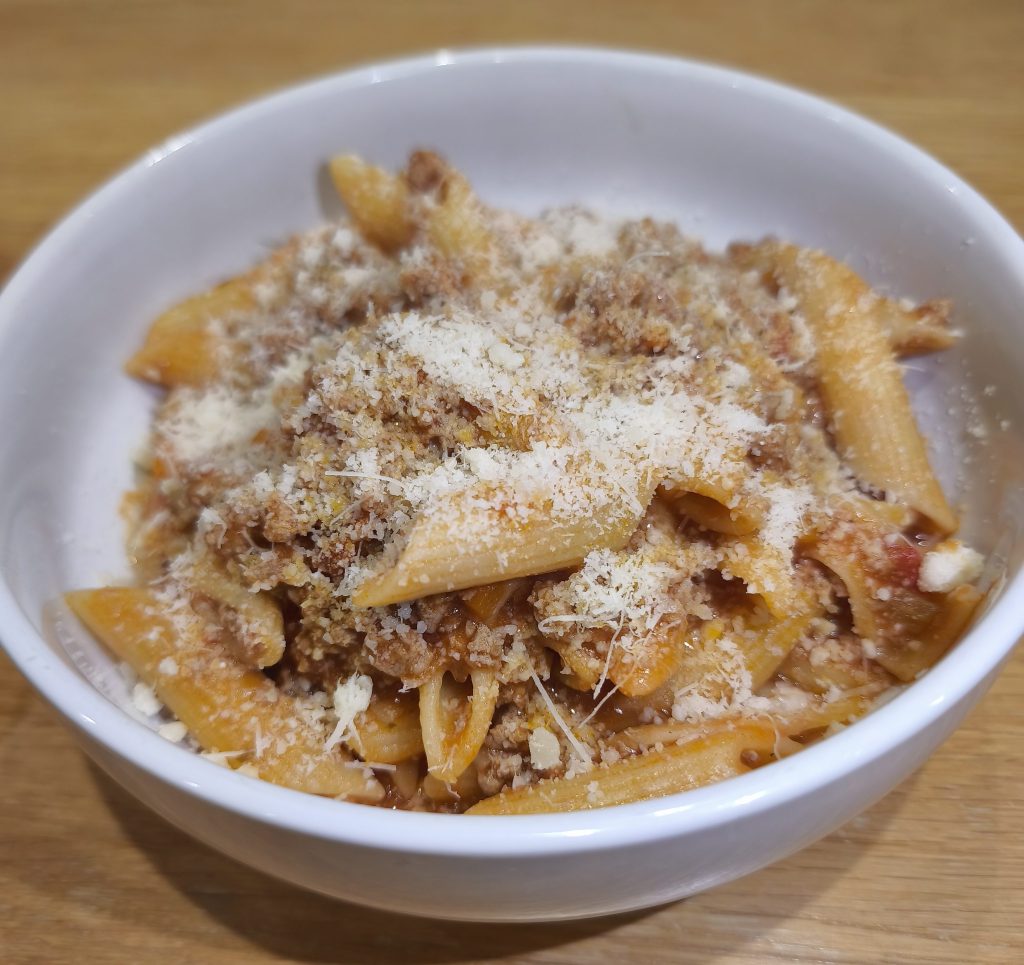
Ingredients for 6-8 servings
- 1 large shallot or red onion
- 3 stalks of celery
- 3 carrots
- 1L passata
- 400 gr Canned Tomatoes (whole plum tomatoes are best, but I use whatever I have on hand—even fresh tomatoes sometimes in the summer)
- 1 kg Turkey mince (That’s what I used here, but chicken mince works just as well. I usually prefer lean mince, but the extra fat definitely adds flavor!)
- 150 gr regular Tomato Paste (or 300gr Smokey Tomato paste like I used here, if you want an extra hint of flavor. It works well with milder meats like turkey or chicken.)
- 1 glass red wine (150-175 ml if you’re feeling boozy!)
- 1-2 teaspoons of sugar (Optional!)
- Salt & Pepper to taste
- Good quality olive oil (I don’t really measure this, just eyeball it! I get mine from my family’s olive trees in Greece—lucky me!)
- Water (1-2 Litres, but I generally just eye-ball it.)
- Full-fat milk (about 1 mug) – Optional
- Salt for pasta (1 tbsp or just eyeball it)
- Pasta of your choice (around 60g dry pasta per person)
- Grated Parmesan or Pecorino (Optional)
Instructions
Step 0: Prep Your Ingredients in Advance!
If you’re like me, a home cook and not a professional chef, you’ve probably learned that trying to “just” chop an onion while something simmers is a recipe for disaster. I always try to prepare everything in advance so I can add ingredients without stress. Chop up your celery, onion, and carrots (and tomatoes if you’re using fresh!). Open up your cans, bottles, or boxes of passata and tomatoes. Get that wine ready, and make sure everything is good to go!

Step 1: Warm Up Your Olive Oil
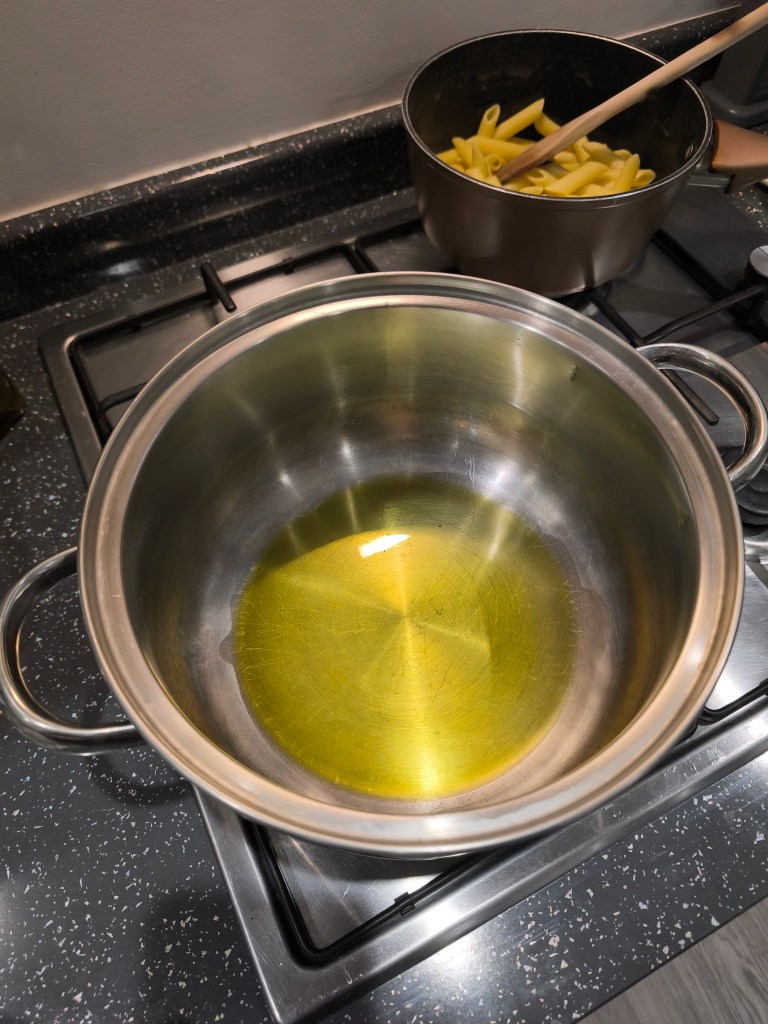
Drizzle enough olive oil to generously cover the bottom of your large pot. Turn the heat to medium-low to let it warm up. Be careful—olive oil can burn and smoke, so don’t get distracted! I normally hover my hand over the oil to feel the heat, but if you’re not sure, toss in a couple of small pieces of onion and listen for a slight sizzle.
Step 2: Put the Onions in the Pot
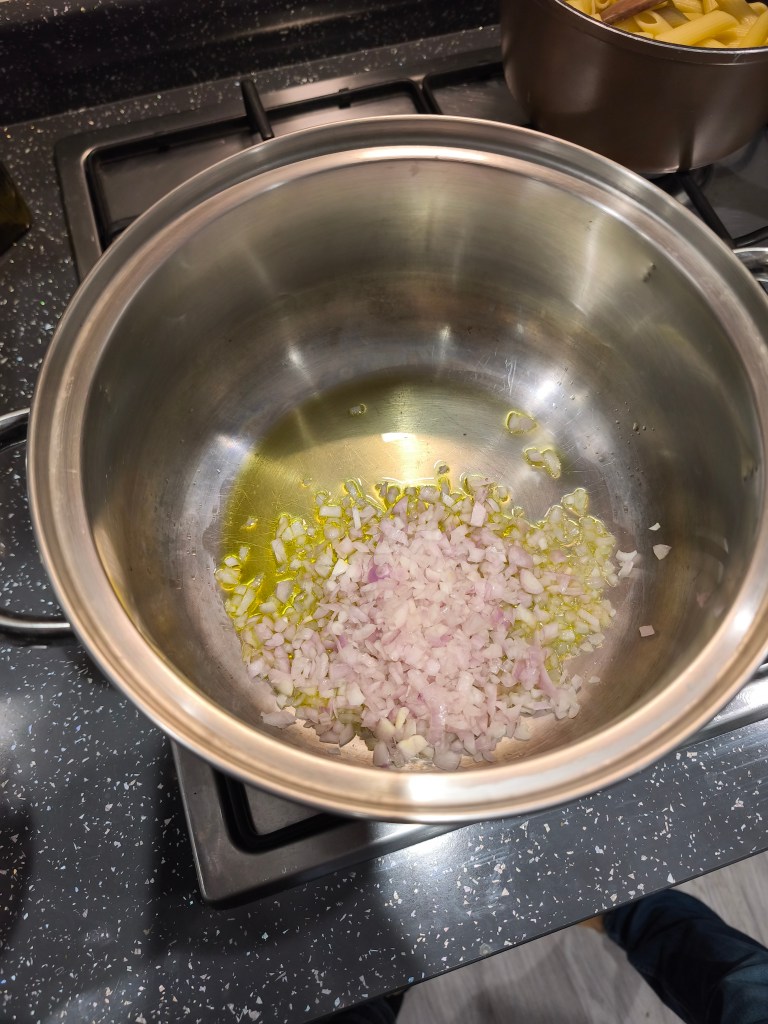
The onions or shallots should go in first. In my opinion, they need the most time to get soft and translucent. This is key for a delicious sauce.
Step 3: Complete the Soffritto Trio
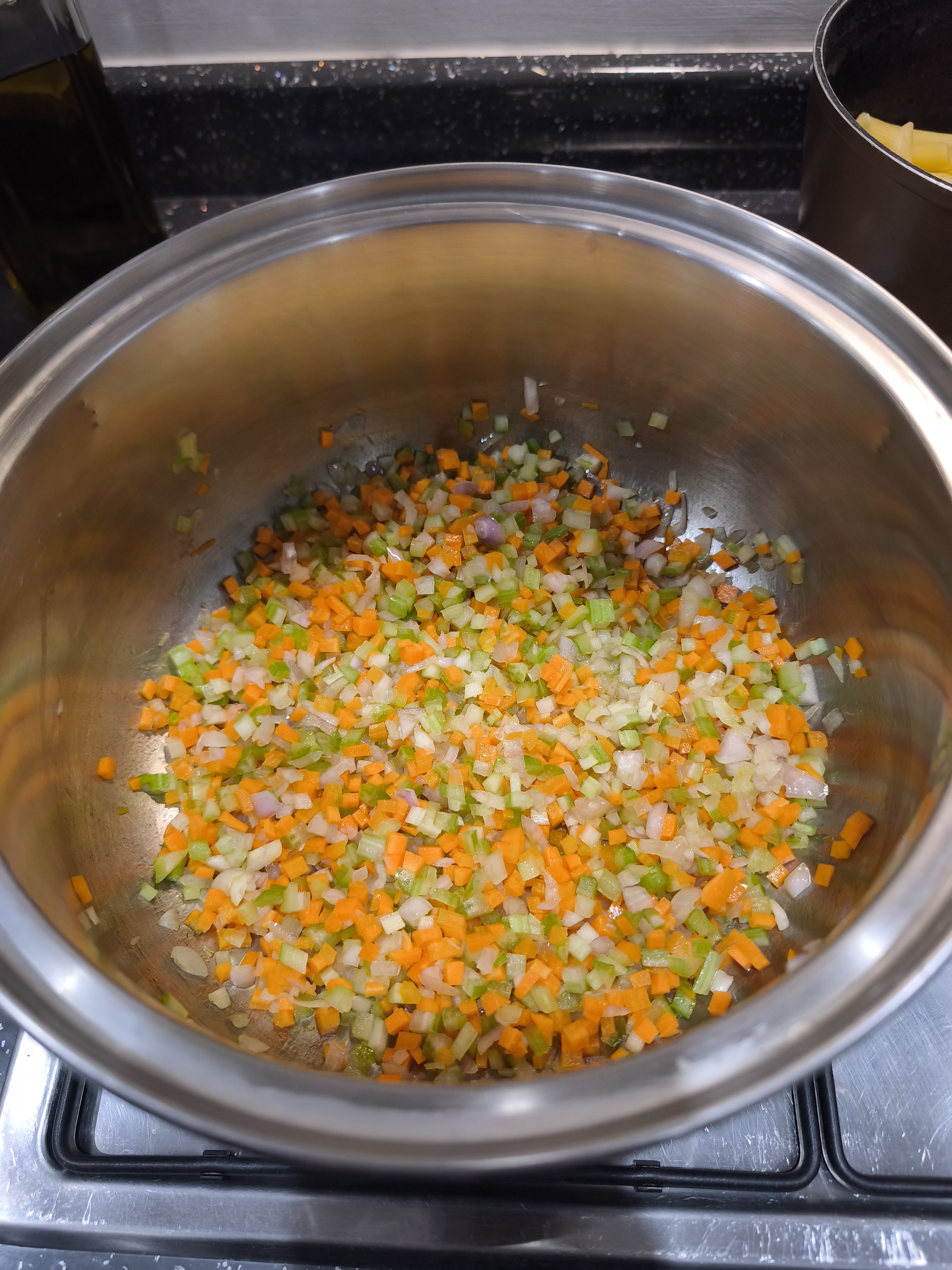
Once the onions are a bit translucent and aromatic, add the carrots and celery. This is the traditional “soffritto,” an absolute staple of Italian cuisine. It’s a true flavor bomb and an amazing base for so many dishes. Cook for a few minutes until the veggies start to soften (it usually takes me 6-7 minutes).


Step 4: Add the Red Wine and Tomato Paste
At this point, I like to stir in the tomato paste and let it lightly sauté with the veggies for a minute or two. Then, immediately add about half the wine and cook until the alcohol evaporates. I find a sweeter wine works best for my version of the recipe, adding a delightful flavor. A Lambrusco or even port works well, but a Pinot Noir, Shiraz, or Cabernet will also work, especially with red meat. I’ll always use whatever I have on hand and add a bit of sugar if I feel it needs it (which is common with less-sweet tomatoes you find in the UK—sue me!).
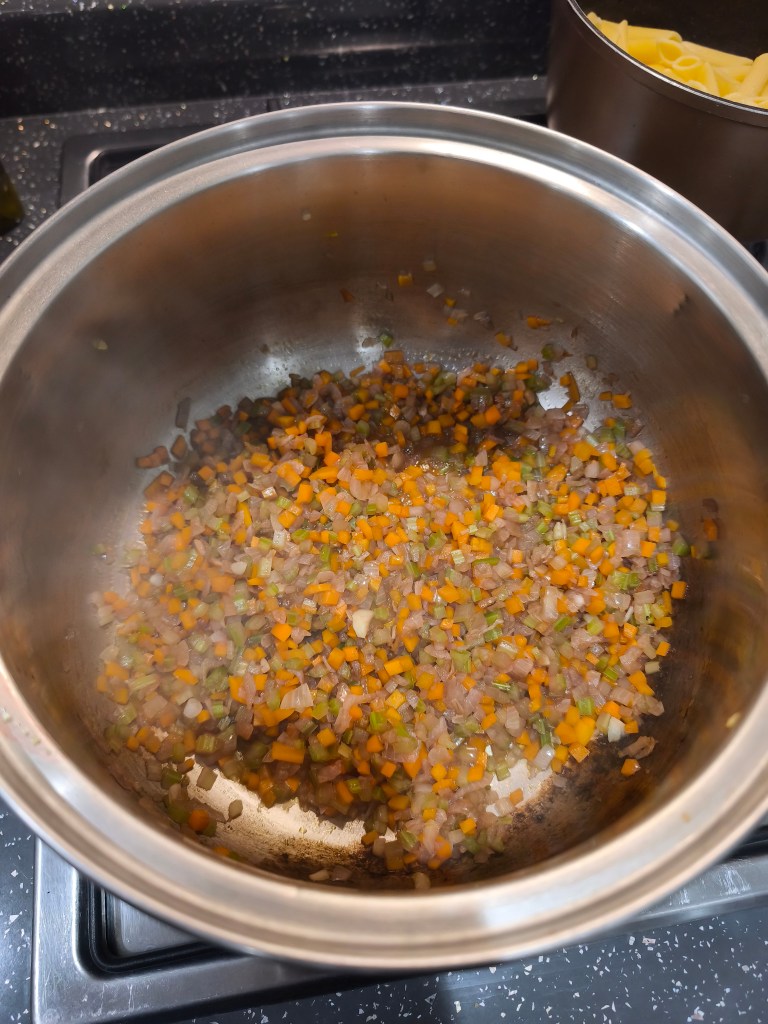
Step 5: Add the Mince!
Add your minced meat to the pot and break it down with your spoon. Don’t be afraid to enlist a partner for this, as it can be tough on the wrist when you’re making a large batch! Ideally, your mince will cook through and brown a little. Just leave it alone to cook and stir occasionally. (I got a bit impatient, so mine is cooked through but rather pale!). Once cooked, mix in the other half of the red wine and wait until it evaporates before the next step. I normally add salt and pepper at this stage to taste, which I like to do because of the milder flavor of the mince I use. It’s totally optional, though—the sauce will still be delicious without it.
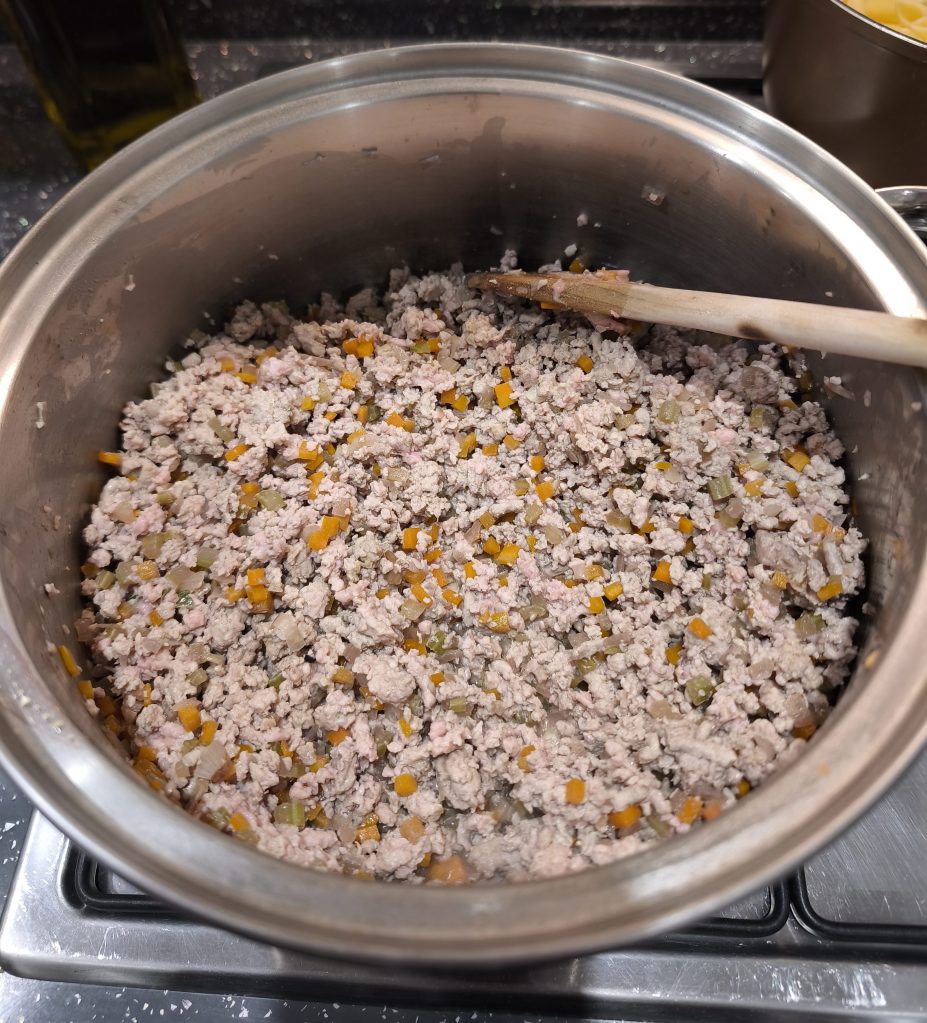
Step 6: Add the Tomatoes!
Once your meat has browned, add the passata and chopped (or whole peeled) tomatoes. This should be enough liquid to start simmering the sauce. I also add a bit of water to rinse out the containers. I’d say I add about 300-500 ml this way.
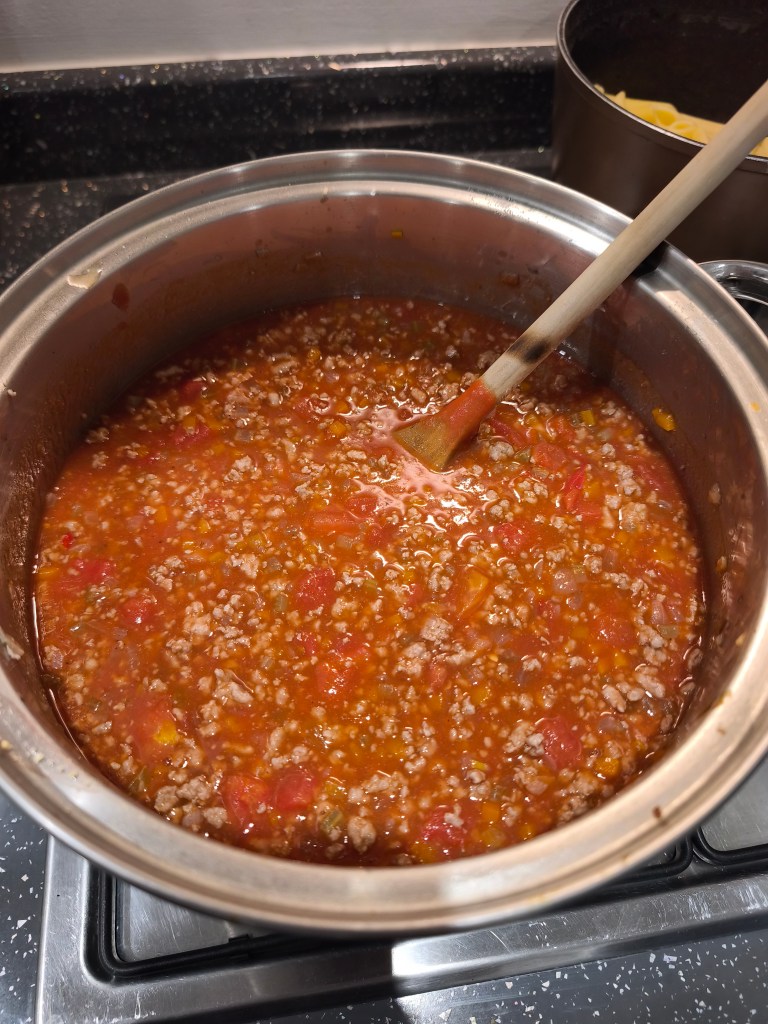
Step 7: Give It Time!
The longer you let this sauce simmer, the better. I try to give it at least 1-2 hours, but ideally, you’ll let it simmer for around 5 hours total. Keep checking on it! Ensure the heat is set to low after it reaches a boil, cover it, and check every so often to see if more hot water needs to be added. You should also give it a gentle stir. If it seems too watery, you can always take the lid off near the end to help it reduce.
Step 8: Pasta Time!
If you’re not my impatient, plan-ahead husband, you haven’t started the pasta yet. Now, while the sauce is off the heat and resting, you can start cooking it. We chose penne here, but any pasta will do. Traditionally, you might use tagliatelle, but any pasta that can hold some sauce will work. Make sure you generously salt your water—otherwise, you’re in for very plain, flavorless pasta! Boil the pasta for 1-2 minutes short of the recommended time, or just before al-dente. Just before you drain it, save about a ladle-full of the starchy pasta water.
Step 9: Marry the Pasta and Sauce!
If you’ve decided to go the traditional route, this is the time to add your milk to the sauce and stir it in. I skipped that this time, and it’s a step I often miss because we don’t usually have cow’s milk in the house, but it adds a lovely creaminess. You may want to heat the sauce back up slightly for a few minutes. I normally just drain the pasta and then put it straight back into the same pot, adding the sauce and the reserved starchy pasta water to “marry” them together. I used to be skeptical, thinking it was just an extra step, but it really does help bind the dish together. If I forget to do it, we can taste the difference!
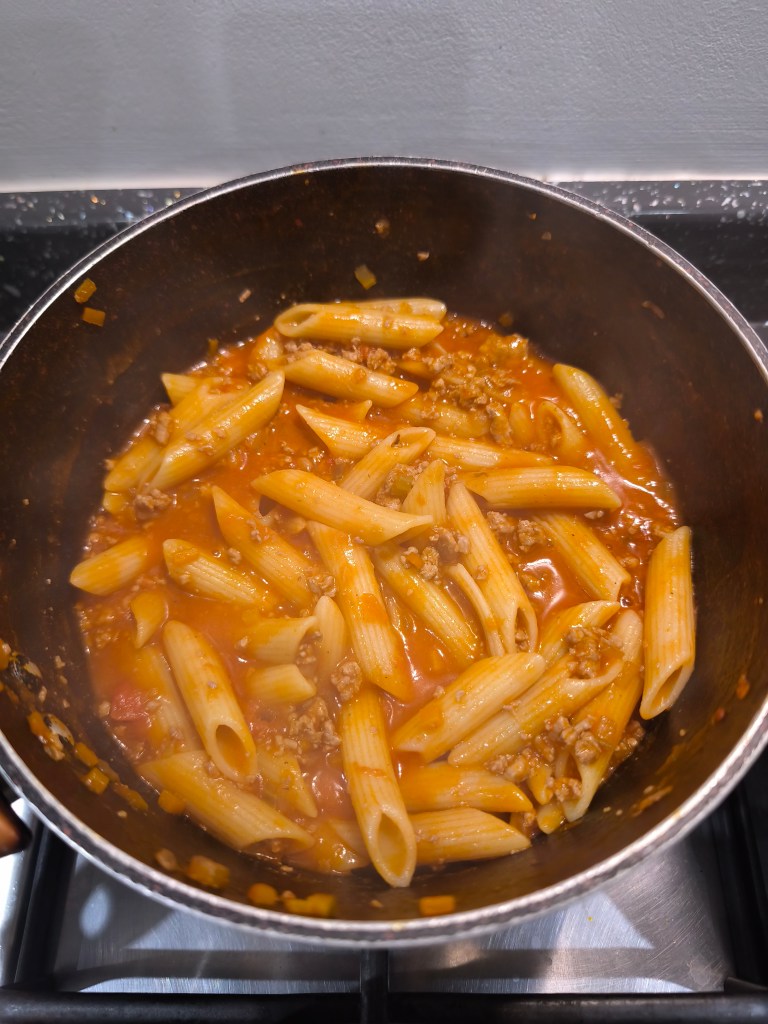
Step 10: Serve and Enjoy!
Serve on warmed plates and enjoy! It’s delicious on its own, but a sprinkle of grated cheese really adds a lovely, savory, rich flavor to the sauce. We used parmesan this time.
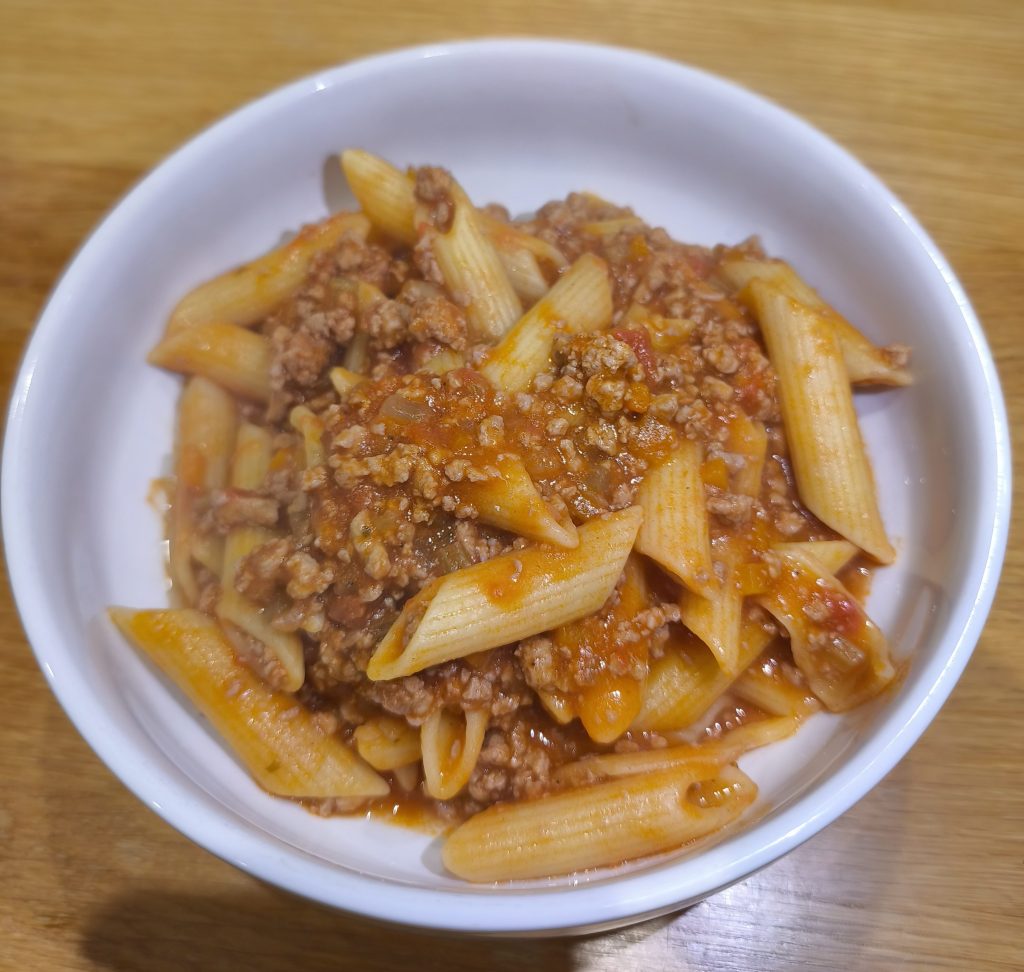
Are you team traditional bolognese or what changes do you make?
 Tasty Food Ventures